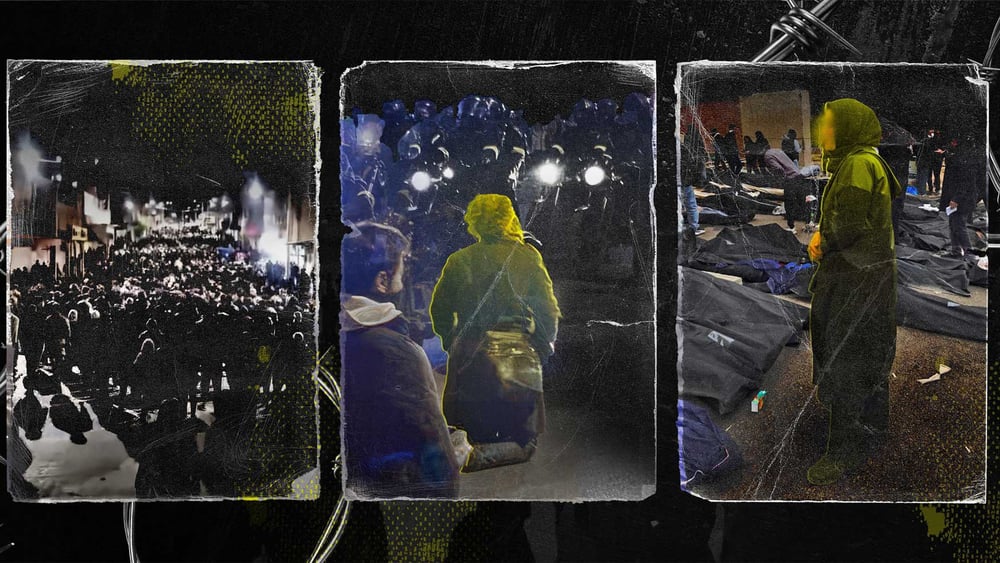
Mindestens 30 Personen droht nach Informationen von Amnesty International wegen angeblicher Straftaten im Zusammenhang mit den Protesten im Januar 2026 die Hinrichtung. Darunter sind acht Personen, die innerhalb weniger Wochen nach ihrer Festnahme zum Tode verurteilt wurden: Saleh Mohammadi (18 Jahre), Mohammad Amin Biglari (19), Ali Fahim, Abolfazl Salehi Siavashani, Amirhossein Hatami, Shahin Vahedparast Kolor, Shahab Zohdi und Yaser Rajaifar. Zu den weiteren Personen, die in einem beschleunigten, grob unfairen Verfahren wegen Kapitalverbrechen vor Gericht stehen, gehören Mohammad Abbasi (55), Mohammadreza Tabary und drei Freunde: der 18-jährige Ehsan Hosseinipour Hessarlou und zwei 17-Jährige, Matin Mohammadi und Erfan Amiri, die als Minderjährige nach internationalem Recht nicht zum Tode verurteilt werden dürfen. Am 12. Februar 2026 teilte ein Richter des Revolutionsgerichts in Teheran 14 weiteren Personen, darunter dem 35-jährigen Demonstranten Abolfazl Karimi, mit, dass «sie zum Tode verurteilt werden» würden. Amnesty hat ausserdem erfahren, dass der 18-jährige Danial Niazi einer Straftat angeklagt wurde, die im Iran mit der Todesstrafe geahndet werden kann. Zwei weitere Personen, der 18-jährige Shervin Bagherian Jebeli und der 24-jährige Amirhossein Azarpira, wurden bei der Vernehmung darüber informiert, dass ihnen die Todesstrafe droht. Amnesty International geht davon aus, dass die tatsächliche Zahl der von der Todesstrafe bedrohten Personen noch höher ist, da die Behörden die Familien systematisch davor warnen, sich zu äussern, den Inhaftierten während der Ermittlungen den Zugang zu einem Rechtsbeistand verweigern und die von den Familien bestellten Rechtsbeistände in den Gerichtsverfahren nicht anerkennen.
Recherchen von Amnesty International zeigen, dass die Behörden Personen, die im Zusammenhang mit den Protesten festgenommen wurden, systematisch verschwinden lassen, in Haft ohne Kontakt zur Aussenwelt nehmen, foltern und anderweitig misshandeln, um von ihnen «Geständnisse» zu erpressen. Eine informierte Quelle berichtete, dass Sicherheitskräfte Ehsan Hosseinipour Hessarlou verprügelt und ihm eine Waffe in den Mund gesteckt hätten. Anderen informierten Quellen zufolge wurde Abolfazl Karimi geschlagen und ihm wurde die medizinische Versorgung seiner während der Proteste erlittenen Verletzungen durch Metallkugeln verweigert. Saleh Mohammadi wurde die Hand gebrochen, und Amirhossein Azarpira wurden durch Schläge Verletzungen im Gesicht zugefügt und Zähne abgebrochen. Einige derjenigen, denen die Todesstrafe droht, sehen sich mit der vagen und weit gefassten Anklage der «Feindschaft zu Gott» (moharebeh) konfrontiert. Ihnen wird vorgeworfen, Stützpunkte der Basidsch-Miliz in Brand gesetzt oder Sicherheitskräfte angegriffen zu haben. Andere werden beschuldigt, Sicherheitskräfte getötet zu haben. Die Behörden haben «Geständnisse» mehrerer Personen aus der Gruppe der 30 im Fernsehen ausgestrahlt und damit gegen die Unschuldsvermutung verstossen. In einem Propagandavideo, in dem Shervin Bagherian Jebeli als schuldig dargestellt wird, Sicherheitskräfte getötet zu haben, hört man den 18-Jährigen fragen, was «Feindschaft zu Gott» bedeutet, was zeigt, wie schutzlos er ohne Zugang zu einem Rechtsbeistand ist. Er bittet um Gnade, als der Verhörende ihm mitteilt, dass die Anklage die Todesstrafe nach sich zieht.
Am 18. Januar 2026 bezeichnete der Sprecher der Justiz, Asghar Jahangir, die Demonstrierenden als «Kriminelle», die «in kürzester Zeit» die «höchste Strafe [die Todesstrafe] für Feindschaft zu Gott» erhalten müssten.
Saleh Mohammadi wurde am 4. Februar 2026 vom Strafgericht Nr. 1 in Ghom zum Tode verurteilt, weniger als drei Wochen nach seiner Festnahme am 15. Januar 2026. Er wird beschuldigt, am Tod eines Sicherheitsbeamten während der Proteste in Ghom am 8. Januar 2026 beteiligt gewesen zu sein, was er bestreitet. Aus dem von Amnesty International eingesehenen Urteil geht hervor, dass er seine «Geständnisse» vor Gericht widerrufen und erklärt hat, sie seien unter Folter erzwungen worden, doch dies vom Gericht ohne weitere Untersuchung zurückgewiesen wurde. Saleh Mohammadi wird im Gefängnis in Ghom festgehalten. Mohammad Amin Biglari, Ali Fahim, Abolfazl Salehi Siavashani, Amirhossein Hatami, Shahin Vahedparast Kolor, Shahab Zohdi und Yaser Rajaifar wurden von der Abteilung 15 des Teheraner Revolutionsgerichts wegen «Feindschaft zu Gott» (moharebeh) zum Tode verurteilt, weil sie einen Stützpunkt der Basidsch-Miliz in Brand gesteckt haben sollen. Ihre Strafen wurden am 9. Februar 2026 verkündet, nicht mal einen Monat nach ihrer Festnahme im Januar 2026. Einer informierten Quelle zufolge fiel Mohammad Amin Biglari dem Verschwindenlassen zum Opfer, bevor er in das Gefängnis Ghezel Hesar in der Provinz Alborz gebracht wurde.
Setzen Sie sich für die im Zusammenhang mit den Protesten willkürlich Inhaftierten im Iran ein: Senden Sie einen Appellbrief → per X/Twitter, Instagram oder per Postversand via dia Botschaft des Iran bei den Vereinten Nationen an die unter ADRESSEN und SOCIAL MEDIA GUIDE angegebene(n) Zielperson(en) und Kontakte. Posten Sie in den sozialen Medien.
→ Frist zum Mitmachen: 31. August 2026.
→ Schreiben Sie in Persisch, Englisch oder in Ihrer eigenen Sprache.
Sehr geehrter Herr Ejei
Mit Entsetzen habe ich erfahren, dass 30 Personen dwegen angeblicher Straftaten im Zusammenhang mit den Protesten im Januar 2026 die Hinrichtung droht. Darunter sind acht Personen, die innerhalb weniger Wochen nach ihrer Festnahme zum Tode verurteilt wurden: Saleh Mohammadi (18 Jahre), Mohammad Amin Biglari (19), Ali Fahim, Abolfazl Salehi Siavashani, Amirhossein Hatami, Shahin Vahedparast Kolor, Shahab Zohdi und Yaser Rajaifar. Zu den weiteren Personen, die in einem beschleunigten, grob unfairen Verfahren wegen Kapitalverbrechen vor Gericht stehen, gehören Mohammad Abbasi (55), Mohammadreza Tabary und drei Freunde: der 18-jährige Ehsan Hosseinipour Hessarlou und zwei 17-Jährige, Matin Mohammadi und Erfan Amiri, die als Minderjährige nach internationalem Recht nicht zum Tode verurteilt werden dürfen. Am 12. Februar 2026 teilte ein Richter des Revolutionsgerichts in Teheran 14 weiteren Personen, darunter dem 35-jährigen Demonstranten Abolfazl Karimi, mit, dass «sie zum Tode verurteilt werden» würden. Amnesty hat ausserdem erfahren, dass der 18-jährige Danial Niazi einer Straftat angeklagt wurde, die im Iran mit der Todesstrafe geahndet werden kann. Zwei weitere Personen, der 18-jährige Shervin Bagherian Jebeli und der 24-jährige Amirhossein Azarpira, wurden bei der Vernehmung darüber informiert, dass ihnen die Todesstrafe droht.
Ich bitte Sie eindringlich, die Schuldsprüche und Todesurteile unverzüglich aufzuheben, von der Verhängung von Todesurteilen abzusehen und dafür zu sorgen, dass alle, die einer international als Straftat anerkannten Handlung angeklagt werden, ein faires Gerichtsverfahren nach internationalen Standards erhalten, ohne Rückgriff auf die Todesstrafe. Sorgen Sie auch dafür, dass Aussagen, die unter Folter oder anderen Misshandlungen oder ohne Anwesenheit eines Rechtsbeistands erlangt wurden, in den Verfahren nicht verwendet werden.
Darüber hinaus fordere ich Sie auf, alle Gefangenen freizulassen, die allein wegen der Ausübung ihrer Menschenrechte wie den Rechten auf friedliche Versammlung und freie Meinungsäusserung inhaftiert sind, alle Inhaftierten vor Folter und anderen Misshandlungen zu schützen und Foltervorwürfen nachzugehen sowie Schicksal und Verbleib verschwundener Personen offenzulegen. Gewährleisten Sie Familien und Rechtsbeiständen eigener Wahl Zugang zu den Gefangenen und sorgen Sie dafür, dass Angeklagte sich angemessen verteidigen können und medizinisch versorgt werden. Gewährleisten Sie ausserdem internationalen Beobachter*innen Zugang zu Hafteinrichtungen und Gerichtsverfahren.
Hochachtungsvoll,
Dear Mr Gholamhossein Mohseni Ejei,
I am writing to express grave concerns about at least 30 individuals who are facing the death penalty in relation to alleged offences committed in the context of the January 2026 protests, according to information gathered by Amnesty International. They include eight people sentenced to death within weeks of their arrests – Saleh Mohammadi, 18, Mohammad Amin Biglari, 19, Ali Fahim, Abolfazl Salehi Siavashani, Amirhossein Hatami, Shahin Vahedparast Kolor, Shahab Zohdi and Yaser Rajaifar. Others being tried in fast-tracked grossly unfair proceedings for capital offences include Mohammad Abbasi, 55; Mohammadreza Tabary and three friends: 18-year-old Ehsan Hosseinipour Hessarlou and two 17-year-old children, Matin Mohammadi and Erfan Amiri, who as children must be excluded from the imposition of the death penalty under international law. On 12 February 2026, a Revolutionary Court judge in Tehran told 14 others, including protester Abolfazl Karimi, 35, that «they are being sentenced to death». The organization has also learned that 18-year-old Danial Niazi has been charged with a capital offence. Interrogators told two others – Shervin Bagherian Jebeli, 18, and Amirhossein Azarpira, 24 – that they will face the death penalty.
Amnesty International believes the real number of those at risk is much higher as authorities systematically warn families against speaking out, deny those detained access to lawyers during investigations and refuse to recognize lawyers appointed by families in trial proceedings.
Amnesty International’s research shows that the authorities have systematically subjected those arrested in connection to the protests to enforced disappearance, incommunicado detention, and torture and other ill treatment to extract forced «confessions». An informed source reported that security forces severely beat Ehsan Hosseinipour Hessarlou and placed a gun in his mouth. According to informed sources, Abolfazl Karimi was beaten and denied care for metal pellet injuries sustained during the protests, Saleh Mohammadi sustained fractures in his hand, and Amirhossein Azarpira sustained facial injuries and broken teeth as a result of beatings. Some of those at risk of the death penalty are facing the vague and broadly worded charge of «enmity against God» (moharebeh), based on accusations of setting Basij bases on fire or assaulting security forces. Others have been accused of killing security personnel. The authorities have broadcast forced «confessions» of several individuals among the 30, violating the presumption of innocence. In a propaganda video portraying Shervin Bagherian Jebeli as guilty of killing agents, the 18-year-old is heard asking what «enmity against God» means, highlighting his vulnerability without access to a lawyer, and he pleads for mercy after the interrogator tells him the charge carries the death penalty.
I urge you to immediately quash the convictions and death sentences; refrain from imposing death sentences and ensure that anyone charged with a recognizable criminal offence is tried in accordance with international fair trial standards without recourse to the death penalty and excluding statements obtained under torture and other ill-treatment or without a lawyer present. I also urge you to release all those detained solely for exercising their human rights including the right of peaceful assembly and expression; protect all detainees from torture and other ill-treatment and investigate claims; disclose the fate and whereabouts of individuals forcibly disappeared; grant access to families, lawyers of their own choosing, adequate defence facilities and medical care; and allow international monitors, including UN Special Procedures and International Fact-Finding Mission on Iran, access to detention facilities and trial sessions.
Yours sincerely,
Hashtag:
#StopExecutionsInIran
Suggested Tweets:
General
Two children are among at least 30 people facing the death penalty in relation to the January uprising in Iran. They are facing fast-tracked torture tainted grossly unfair trials. Authorities must stop using the death penalty. #StopExecutionsInIran
Iranian authorities have sentenced at least 8 people to death within weeks of their arrest: Saleh Mohammadi, 18, Mohammad Amin Biglari, 19, Ali Fahim, Abolfazl Salehi Siavashani, Amirhossein Hatami, Shahin Vahedparast Kolor, Shahab Zohdi & Yaser Rajaifar. #StopExecutionsInIran
Children
Two 17-year-olds, Matin Mohammadi and Erfan Amiri, are on trial before a Revolutionary Court in Iran on capital offences related to the January 2026 uprising. The death penalty must never be imposed on children under international law. #StopExecutionsInIran
Torture
Informed sources said 18-year-old Saleh Mohammadi suffered fractures in his hand under torture in Iran. Now he is at risk of execution after being sentenced to death in a grossly unfair trial in relation to the January uprising. #StopExecutionsInIran
24-year-old Amirhossein Azarpira was subjected to torture and other ill-treatment in Iran and sustained facial injuries and bruising from beatings, according to informed sources. Now he could be at risk of the death penalty in relation to the January uprising. #StopExecutionsInIran
18-year-old Ehsan Hosseinipour Hessarlou was subjected to torture and other ill-treatment in Iran @amnesty learned from informed sources. Security forces severely beat him and placed a gun in his mouth. Now he could be at risk of the death penalty in relation to the January uprising. #StopExecutionsInIran
We @amnesty received alarming reports that Abolfazl Karimi was subjected to torture and other ill-treatment including beating and denial of medical care for injuries sustained during the January protests. Now he risks the death penalty. #StopExecutionsInIran
Forced "confessions"
18‑year‑old Shervin Bagherian Jebeli risks the death penalty in Iran in relation to the January uprising. Authorities aired his forced "confessions" in a cruel propaganda video which shows him being denied due process, including access to a lawyer & told on camera that he is accused on capital crimes.
18‑year‑old Danial Niazi was forced to make "confessions" within 24 hours of his violent arrest after interrogators repeatedly tortured him, according to information gathered by @amnesty. Now he risks the death penalty in relation to the January uprising. #StopExecutionsInIran
Oberste Justizautorität:
Head of judiciary
Gholamhossein Mohseni Ejei
c/o Embassy of Iran to the United Nations
Chemin du Petit-Saconnex 28
1209 Genève
Instagram: https://www.instagram.com/ejeii_org/
X/Twitter: https://x.com/ejei_org
Botschaft der Islamischen Republik Iran
Thunstrasse 68, Postfach 227
3000 Bern 6
Fax: 031 351 56 52
E-Mail: secretariat@iranembassy.ch
Twitter/X: iraninbern
→
Weltweite Briefzustellung: Der Versand von Briefen ist in fast alle Länder möglich. Trotzdem kann der Zustellservice aus unterschiedlichen Gründen zeitweise eingestellt werden. Wir aktualisieren die Infos soweit möglich. Bitte prüfen Sie vorher bei der Schweizer Post, ob Briefe im Zielland aktuell zugestellt werden:
Verkehrseinschränkungen ›
DRUCKFERTIGE MODELLBRIEFE (WORD):
• MODELLBRIEF DEUTSCH 006/26-1
• MODEL LETTER ENGLISH 006/26-1
DIESE URGENT ACTION – KOMPLETT (WORD-DATEI):
(Seite 1 Hintergrundinformationen, Seite 2 Modellbrief)
• UA 006/26-1 – DEUTSCH
• UA 006/26-1 – ENGLISH
→ Versandmöglichkeiten und Zielperson(en) siehe: ADRESSEN und SOCIAL MEDIA GUIDE
→ Verwenden Sie unsere Briefvorschläge oder schreiben Sie in Ihren Worten.
→ Portokosten für Briefversand: Europa = CHF 1.90 / alle übrigen Länder = CHF 2.50
→ Weitere Informationen zum Mitmachen bei den Urgent Actions finden Sie hier
English version (click on title to open):
Following repeated threats of expedited executions, Iranian authorities have sentenced at least eight people to death in February 2026. At least 22 others, including two children, are at risk of the death penalty amid fast-tracked torture-tainted grossly unfair trials for alleged offences committed during the January 2026 uprising.
On 18 January 2026, the spokesperson of the judiciary, Asghar Jahangir, labelled protesters «criminals» who must receive «the maximum punishment [death penalty] for «enmity against God» in the «shortest possible time».
Saleh Mohammadi was sentenced to death by Criminal Court One in Qom on 4 February 2026, less than three weeks after his arrest on 15 January 2026 in connection with the death of an agent during protests in Qom on 8 January 2026, an accusation he denies. The verdict, reviewed by Amnesty International, shows that he retracted his «confessions» in court saying they were extracted under torture, but the court dismissed this without any investigation. He is held in Qom prison. Mohammad Amin Biglari, Ali Fahim, Abolfazl Salehi Siavashani, Amirhossein Hatami, Shahin Vahedparast Kolor, Shahab Zohdi and Yaser Rajaifar were sentenced to death for «enmity against God» (moharebeh) by Branch 15 of the Revolutionary Court of Tehran for allegedly setting a Basij base on fire. Their sentences were issued on 9 February 2026, less than a month after arrest in January 2026. An informed source said Mohammad Amin Biglari was forcibly disappeared for several weeks before being moved to Ghezel Hesar prison in Alborz province.
Ehsan Hosseinipour Hessarlou, Matin Mohammadi and Erfan Amiri are undergoing trial before Branch 26 of the Revolutionary Court of Tehran. On 14 February 2026, state media announced their trial, and published a video showing Ehsan Hosseinipour Hessarlou in a courtroom responding to questions from a judge who presumed his guilt, and «confessing» to making and throwing Molotov cocktails. All three are accused of involvement in setting a mosque, used as a Basiji base, on fire during the protests in Pakdasht, Tehran province, on 8 January 2026, leading to the deaths of two Basiji agents. An informed source said that Basiji agents arrested the teenagers on 8 January 2026 before the incident, and that Ehsan Hosseinipour Hessarlou made forced «confessions» after severe beatings and death threats at gunpoint. According to the source, the presiding judge refused to allow at least three defence lawyers chosen by Ehsan Hosseinipour Hessarlou’s family to represent him and threatened them. The source added that authorities assigned him a state appointed lawyer for the trial stage who failed to defend him in court. His 17-year-old friends and co-defendants are held in a juvenile correction centre in Tehran province and are also facing capital charges. International law prohibits the use of the death penalty for those aged under 18 at the time of the alleged offence.
Abolfazl Karimi is undergoing a fast-tracked, torture-tainted grossly unfair trial before Branch 15 of the Revolutionary Court in Tehran in a case with 13 other defendants also arrested in connection with the uprising. An informed source said Abolfazl Karimi was arrested in Tehran on 6 January 2026 after attempting to assist two women who had been shot in their legs. According to the source, agents shot him with metal pellets and then arrested him along with the two women. The source said that after his arrest, Abolfazl Karimi was subjected to torture and other ill-treatment, including severe beatings and the deliberate denial of medical care for his metal pellet injuries, and was forced to sign self-incriminating statements while blindfolded. According to information gathered by Amnesty International, around 12 February 2026, the presiding judge of Branch 15 of the Revolutionary Court told Abolfazl Karimi and the 13 others during an online session that they «were being sentenced to death». The nature of the charges brought against the 14 individuals and the stage of the proceedings against them remain unclear to Amnesty International. Abolfazl Karimi is held in Ghezel Hesar prison.
Mohammad Abbasi is undergoing trial before a Revolutionary Court of Tehran in connection to the fatal assault of a police agent on 7 January 2026 during protests in Malard, Tehran province. According to state media, he was arrested less than 10 days after the incident and his trial started on 27 January 2026. State media published a video of the trial session, along with a narrative violating his right to presumption of innocence. In the video, a representative of the police is seen questioning him in a manner that presumes his guilt. He is shown «confessing» while no lawyer is shown intervening or representing his interests. Shervin Bagherian Jebeli was arrested in Esfahan, Esfahan province, on 12 January 2026 after security forces raided his home at night, beating and transferring him to an unidentified location, according to an informed source. A week later, while forcibly disappeared, state media aired a propaganda video portraying him as guilty of killing four Basiji agents during protests in Esfahan on 8 January 2026, which he denies. The source said authorities have subjected him to severe beatings, denied him access to a lawyer, and told him he faces the death penalty. On 3 February 2026, he was transferred to Dastgerd prison in Esfahan. Danial Niazi was violently arrested in Shirvan, Khorasan Razavi province, on 12 January 2026. An informed source said that he was forced to «confess» under torture within 24 hours of his arrest. Amirhossein Azarpira, arrested in Zarinshahr, Esfahan province, on 27 January 2026, has been also threatened with the death penalty by interrogators.
Write an appeal in your own words or use the model letter below. You find a ready-to-print model letter under
→ AKTUELLE DOKUMENTE
→ Addresses see above in ADRESSEN
Please also take action on Social Media (guide see above).
→ SOCIAL MEDIA GUIDE
→ Please take action before 31 August 2026.
→ Preferred language: Persian, English. You can also write in your own language.