£ Caption missing
Iran – Briefaktion

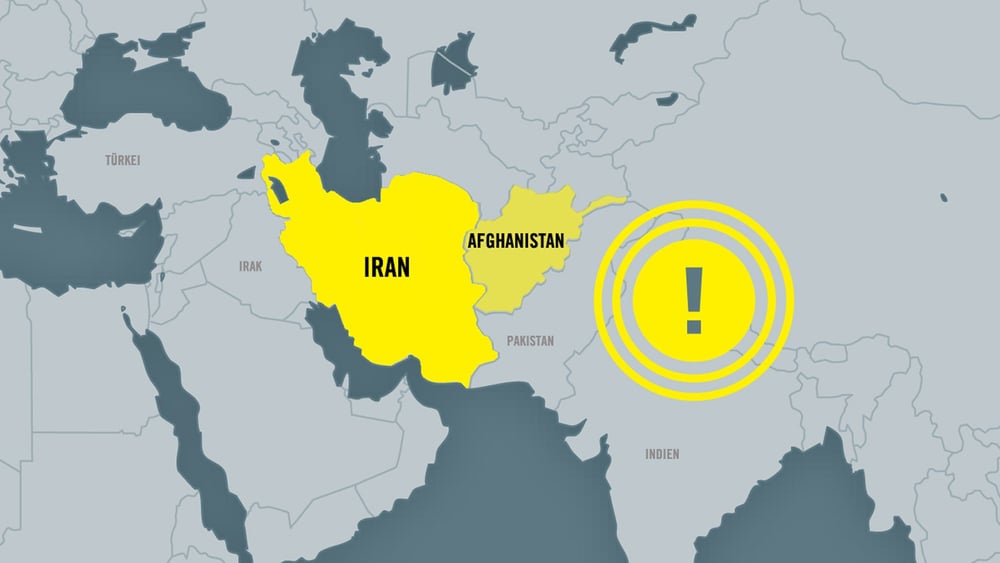
Millionen Afghan*innen im Iran droht die Ausweisung

Mehr als eine Million Afghan*innen sind im Jahr 2025 bereits unter Verstoss gegen das Völkerrecht aus dem Iran nach Afghanistan abgeschoben worden. Darunter sind auch Menschen, die im Iran geboren wurden oder seit Jahrzehnten dort lebten. Die Massenabschiebungen haben mit der Eskalation der Kampfhandlungen zwischen Israel und dem Iran zugenommen. Mehr als eine halbe Million Afghan*innen sind seit dem 1. Juni abgeschoben worden, darunter Tausende unbegleitete Minderjährige. Millionen weiteren Afghan*innen droht die Abschiebung, darunter auch Frauen und Mädchen, die als solche als Flüchtlinge anerkannt werden müssen und nicht nach Afghanistan zurückgeschickt werden dürfen, da die Taliban sie dort aufgrund ihres Geschlechts verfolgen.

Details

Weiterlesen

Die iranischen Behörden nehmen derzeit beispiellose Massenabschiebungen von Afghan*innen vor. Seit Anfang 2025 sind bereits mehr als eine Million Menschen abgeschoben worden, darunter unbegleitete und von ihren Eltern getrennte Minderjährige, Flüchtlinge und Asylsuchende, im Iran geborene Menschen sowie Afghan*innen, die seit Jahrzehnten im Iran lebten. Nach Angaben des UN-Hochkommissars für Flüchtlinge (UNHCR) hat sich die Lage seit dem 1. Juni 2025 weiter verschärft und Millionen weitere Afghan*innen sind in Gefahr, ebenfalls abgeschoben zu werden. In Afghanistan herrscht derzeit eine schwere menschenrechtliche und humanitäre Krise, und vielen der dorthin Abgeschobenen drohen Verfolgung und Menschenrechtsverstösse durch die Taliban.

Nachdem die Kampfhandlungen zwischen Israel und dem Iran am 13. Juni 2025 eskalierten, nahmen die Massenabschiebungen weiter zu. Am 22. Juni zitierten die staatlichen Medien einen Angehörigen der iranischen Grenztruppen mit den Worten, dass «alle nicht autorisierten Staatsangehörigen den Iran verlassen müssen». (Die iranischen Behörden bezeichnen afghanische Staatsangehörige und Menschen afghanischer Herkunft oft als «nicht autorisierte Staatsangehörige».) Die massenhaften Abschiebungen verstossen gegen das Völkerrecht und werden u. a. mittels Hausdurchsuchungen, Personenkontrollen auf der Strasse und willkürlicher Festnahmen durchgeführt. Häufig werden Menschen so schnell abgeschoben, dass sie keine Gelegenheit haben, ihre Habseligkeiten mitzunehmen. Die iranischen Behörden greifen gegenüber Afghan*innen immer stärker auf entmenschlichende Rhetorik zurück und schüren damit Hassreden und Hassverbrechen. Sie entziehen Afghan*innen zudem wirtschaftliche und soziale Rechte wie den Zugang zur Gesundheitsversorgung und zur Grundschul- und Sekundarbildung.

Unter den nach Afghanistan Abgeschobenen befinden sich Frauen und Mädchen, Künstler*innen, Dissident*innen, ehemalige Regierungsangehörige, Journalist*innen und Menschenrechtsverteidiger*innen. Ihnen allen drohen Menschenrechtsverstösse durch die Taliban. Nach dem im Völkerrecht verankerten Grundsatz der Nicht-Zurückweisung (Non-Refoulement-Prinzip) dürfen Staaten niemanden in ein Land zurückschicken, in dem ihm*ihr nachweislich Menschenrechtsverstösse drohen würden. Frauen und Mädchen würden in Afghanistan ihrer Menschenrechte beraubt. Unter anderem werden ihnen dort die Rechte auf freie Meinungsäusserung, Glaubensfreiheit, Bildung, Arbeit, Freizügigkeit, körperliche Selbstbestimmung und Schutz vor Folter und anderer Misshandlung aberkannt. Alle Staaten und auch der Iran müssen afghanischen Frauen und Mädchen als Gruppe den Flüchtlingsstatus zusprechen. Sie dürfen nicht nach Afghanistan abgeschoben werden, da sie dort geschlechtsspezifischer Verfolgung durch die Taliban ausgesetzt sind, was ein Verbrechen gegen die Menschlichkeit darstellt.

Der Iran hat in den vergangenen 40 Jahren so viele afghanische Flüchtlinge aufgenommen wie kaum ein anderes Land. Nach Angaben des UNHCR hielten sich 2022 mehr als 4,5 Mio. Afghan*innen im Iran auf. Mindestens eine Million waren seit der erneuten Machtergreifung der Taliban im Jahr 2021 in den Iran geflohen, darunter afghanische Menschenrechtler*innen, Aktivistinnen und Protestteilnehmerinnen sowie Journalist*innen und Andersdenkende. Im Iran werden Afghan*innen im Gesetz und in der Praxis stark diskriminiert, u. a. in Bezug auf Bildung, Wohnraum, Beschäftigung, Gesundheitsversorgung, Bankdienstleistungen und Bewegungsfreiheit. Dies gilt sowohl für Neuankömmlinge als auch für Afghan*innen, die seit Jahrzehnten im Iran leben oder im Iran geboren wurden. Sie sind auch mit Rassismus konfrontiert, der durch Hassreden seitens der Behörden weiter angefacht wird und zu Gewalttaten durch staatliche und nichtstaatliche Akteure führt, die häufig ungestraft bleiben.

Die iranischen Gesetze enthalten keine verlässlichen rechtlichen Möglichkeiten zur Einbürgerung, ausser durch die Heirat mit einem*r iranischen Staatsangehörigen und unter ein paar wenigen aussergewöhnlichen Umständen. Infolgedessen haben die meisten Afghan*innen im Iran auch nach Jahrzehnten noch einen prekären Migrationsstatus, und ihre Kinder erhalten nicht automatisch die iranische Staatsangehörigkeit, obwohl sie im Land geboren sind. Bis März 2025 hatten Millionen Afghan*innen noch die Möglichkeit, vorübergehend einen offiziellen Aufenthaltsstatus im Iran zu erhalten, indem sie sich um ein Dokument namens bargeh-e sarshomari bemühten. Mit diesem Dokument hatten sie Zugang zu eingeschränkten sozioökonomischen Leistungen wie z. B. staatliche Gesundheitsfürsorge, öffentliche Bildung, Beschäftigung, Bankkonten und Mietverträge. Am 12. März kündigte die dem Innenministerium unterstehende Einwanderungsstelle an, dass die bargeh-e sarshomari-Dokumente für Afghan*innen automatisch mit Beginn des Jahres 1404 nach iranischem Kalender (am 20. März 2025) ablaufen würden und damit auch der Zugang zu allen sozioökonomischen Dienstleistungen gestoppt werde. In den folgenden Monaten teilten die iranischen Behörden mit, dass sie Afghan*innen, deren Dokumente abgelaufen waren, bis Juni 2025 nach Afghanistan abzuschieben gedachten. Vom 1. Juni bis 10. Juli schoben sie mindestens 546’000 Menschen ab, darunter 5’000 «unbegleitete und von ihren Eltern getrennte Minderjährige» im Juni 2025.

Werden Sie aktiv:

Setzen Sie sich für die geflüchteten Afghan*innen im Iran ein: Senden Sie einen Appellbrief
per Post oder Instagram und posten Sie auch in den sozialen Medien an die unter ADRESSEN und SOCIAL MEDIA GUIDE angegebene(n) Zielperson(en) und Kontakte.

Frist zum Mitmachen: 31. Dezember 2025.
Schreiben Sie in Persisch, Englisch oder in Ihrer eigenen Sprache.

Briefvorschlag - Deutsch

Sehr geehrter Herr Momeni

Mit grosser Sorge habe ich von den völkerrechtswidrigen Massenabschiebungen von Afghan*innen nach Afghanistan erfahren. Unter ihnen viele unbegleitete Minderjährige. Frauen dürfen qua ihres Geschlechts ohnehin nicht nach Afghanistan abgeschoben werden, da ihre Menschenrechte dort grundsätzlich verletzt werden.

Stoppen Sie bitte umgehend die massenhafte Abschiebung von Afghan*innen und sorgen Sie dafür, dass alle Afghan*innen im Iran angemessenen Schutz erhalten, u. a. durch einen regulären Migrationsstatus, der sie vor Refoulement schützt.

Ich fordere Sie zudem dringend auf, alle Afghan*innen im Iran vor willkürlicher Festnahme, Diskriminierung und Folter und anderen Misshandlungen zu schützen, u. a. beim Zugang zu Wohnraum, Gesundheitsversorgung und Bildung.

Alle afghanischen Frauen und Mädchen müssen prima facie als Flüchtlinge anerkannt werden, da sie in Afghanistan geschlechtsspezifischer Verfolgung ausgesetzt sind, was ein Verbrechen gegen die Menschlichkeit ist.

Bitte lassen Sie alle Personen, die willkürlich aufgrund ihrer afghanischen Herkunft und/oder Staatsangehörigkeit inhaftiert sind, unverzüglich frei.

Hochachtungsvoll,
 

Model letter - English

Dear Mr. Eskandar Momeni

I am alarmed by the Iranian authorities’ ongoing and unprecedented mass expulsions of over a million Afghans, including unaccompanied and separated children, refugees and asylum seekers, individuals born in Iran to Afghan parents and Afghans living in Iran for decades, since the start of 2025. This pattern has escalated since 1 June 2025, according to UN Refugee UN Refugee UN Refugee Agency (UN-HCR), with millions more Afghans at risk. This comes amid severe human rights and humanitarian crises in Afghanistan, where many of those returned face imminent risk of persecution and human rights violations by the Taliban.

After the escalation of hostilities between Israel and Iran on 13 June 2025, the mass expulsions further escalated. On 22 June 2025, state media quoted an official from Iran’s border force saying «all unauthorized nationals must leave Iran» – a term often used by the authorities to refer to Afghans. The unlawful expulsion campaign has involved home raids, stop-and-searches, arbitrary arrests and forcible returns of people with nothing but the clothes on their backs. Iranian officials have intensified their use of dehumanizing rhetoric against Afghans, fuelling hate speech and hate crimes. They are also depriving Afghans, including children, of socioeconomic rights, including primary and secondary education and healthcare.

Those forcibly returned to Afghanistan, including women and girls, artists, dissidents, former officials, journalists and human rights defenders, face a real risk of human rights violations by the Taliban. Under the non-refoulement principle, as laid out in international law, states are prohibited from returning anyone to a country where they would be at real risk of violations. If returned to Afghanistan, woman and girls would be deprived of their human rights, including the rights to freedom of expression, belief, education, work, freedom of movement, protection from torture and other ill-treatment and bodily autonomy. All states, including Iran, must recognize Afghan women and girls as refugees and not return them to Afghanistan where the Taliban commit the crime against humanity of gender persecution against them.

I call on you to immediately stop the mass expulsion of Afghans and provide all Afghans in Iran with protection, including a regular migration status that protects them from refoulement. I further call on the Iranian authorities to protect all Afghans in Iran from arbitrary arrest, torture and other ill-treatment and discrimination, including in access to housing, healthcare and education. All Afghan women and girls must be recognized as refugees and anyone arbitrarily detained based on their Afghan identity and/or nationality must be immediately released.

Yours sincerely,
 

Social Media Guide

Suggested hashtags:

#EndMassDeportations
#ProtectAfghanRefugees

Tweet-Entwürfe / Draft Tweets:

1.
More than 1 million Afghans have been forcibly returned to Afghanistan from Iran in 2025 as Iranian authorities wage a mass unlawful expulsion campaign - they must stop now! [insert UA link]

2.
More than 1 million Afghans have been forcibly returned to Afghanistan in 2025 as Iran's authorities wage a mass expulsion campaign - they must stop! This is a flagrant breach of their human rights obligation [insert UA link]

3.
Iran must observe its international legal obligations & the principle of non-refoulement by stopping the forced return of Afghan refugees to Afghanistan now! Pls share this Urgent Action & call on Iranian authorities to stop expelling Afghan refugees. [insert UA link]

4.
A significant number of Afghan refugees including journalists, human rights defenders, women protestors, artists and former government officials and security personnel would be at imminent risk of persecution and repression by the Taliban if forced to return to Afghanistan. Share this Urgent Action and call on the Iranian authorities to halt deportation of Afghan refugees.
 

Adressen

Innenminister:
Minister of interior
Eskandar Momeni

c/o Embassy of Iran to the United Nations
Chemin du Petit-Saconnex 28
1209 Genève

Instagram: https://www.instagram.com/skandarmomeni/


KOPIEN AN

Botschaft der Islamischen Republik Iran
Thunstrasse 68
Postfach 227
3000 Bern 6

Fax: 031 351 56 52 / Twitter/X: iraninbern
E-Mail: secretariat@iranembassy.ch


Weltweite Briefzustellung: Der Versand von Briefen ist in fast alle Länder möglich. Trotzdem kann der Zustellservice aus unterschiedlichen Gründen zeitweise eingestellt werden. Wir aktualisieren die Infos soweit möglich.
Bitte prüfen Sie vorher bei der Schweizer Post, ob Briefe im Zielland aktuell zugestellt werden:
Verkehrseinschränkungen ›


• AkTuelle Dokumente

DRUCKFERTIGE MODELLBRIEFE:
•  MODELLBRIEF DEUTSCH 074/25 (WORD)
•  MODEL LETTER ENGLISH 074/25 (WORD) 

DIESE URGENT ACTION – KOMPLETT ALS WORD-DATEI:
(Seite 1 Hintergrundinformationen, Seite 2 Modellbrief)
•  UA 074/25 – DEUTSCH
•  UA 074/25 – ENGLISH
 

Versandmöglichkeiten und Zielperson(en) siehe: ADRESSEN und SOCIAL MEDIA GUIDE
Verwenden Sie unsere Briefvorschläge oder schreiben Sie in Ihren Worten.
Portokosten für Briefversand: Europa = CHF 1.90 / alle übrigen Länder = CHF 2.50
Weitere Informationen zum Mitmachen bei den Urgent Actions finden Sie hier


English version (click on title to open):

Millions more Afghans in Iran facing expulsion

More than one million Afghans, including those born in Iran and those living in Iran for decades, have been forcibly returned to Afghanistan in 2025 as the Iranian authorities wage an unlawful expulsion campaign. The mass expulsions scaled up around the escalation of hostilities between Israel and Iran, with over half a million Afghans expelled since 1 June 2025, including several thousand unaccompanied children. Millions of others are at risk, including women and girls who must be treated as prima-facie refugees and not returned to Afghanistan where the Taliban are committing the crime against humanity of gender persecution against them.

Iran has hosted one of the largest populations of Afghan refugees and asylum seekers in the world for 40 years. According to UNHCR, as of 2022, there were more than 4.5 million Afghans in Iran, and at least a million fled to Iran since the return of the Taliban to power in 2021, including Afghan human rights defenders, women activists and protestors, journalists and other dissidents. The population of Afghans in Iran, including recently arrived Afghans, those who have lived in the country for decades and individuals born in Iran to Afghan parents, face widespread discrimination in law and in practice, including barriers to education, housing, employment, healthcare, banking services and freedom of movement. They also face a pervasive climate of racism and xenophobia, fuelled by hate speech from authorities and resulting in acts of violence against them by both state and non-state actors that often go unpunished.

Iranian laws do not offer a reliable pathway to naturalization, except through marriage to an Iranian national or under a few other exceptional circumstances. As a result, most Afghans residing in Iran retain a precarious migration status, even after decades of living in the country, and their children, despite being born in Iran, are not automatically granted Iranian nationality either. Until March 2025, several million Afghans had been permitted to temporarily legalize their stay in Iran through obtaining a «headcount» document (bargeh-e sarshomari). Those granted this document could access limited socioeconomic services, including access to state healthcare, public education, work authorization, banking access and ability to enter into rental agreements. On 12 March 2025, Iran’s Centre for Foreign Nationals and Immigration Affairs, which falls under the Ministry of Interior, announced that «headcount» documents for Afghans would automatically expire from the start of the year 1404 on Iran’s calendar (corresponding to 20 March 2025) and that access to all socioeconomic services would be terminated. In the following months, the Iranian authorities stated their objective to return Afghans whose «headcount» documents had expired to Afghanistan by June 2025. Between 1 June and 10 July 2025, Iranian authorities expelled at least 546’000 people, including 5’000 «unaccompanied and separated children» in June 2025.

Amnesty International documented the testimonies of seven Afghans, which demonstrate the patterns of violations Iranian authorities are committing against Afghans through expedited expulsions. An Afghan man still in Iran at the time he spoke to Amnesty International in early July 2025 said he had been unable to enrol his children into public school as their «headcount» documents had expired, and that due to fear of arbitrary arrest and deportation, he was unable to freely leave his house during the day. He said, «I feel I am under house arrest. I only go out for a walk during nights. I sleep during the days so that time passes». He further stated that his SIM-card had stopped working and, as he had fled to Iran after the Taliban takeover in 2021, he was at risk of arbitrary arrest by the Taliban due to his prior media work in Afghanistan. If arrested in Afghanistan, he would be at risk of grave human rights violations. Others who spoke to Amnesty International had been forced to leave Iran due to the expiry of their «headcount» documents. They said that the Iranian authorities charged them exorbitant fees for forced return transport to Afghanistan and that they were also forced to pay for municipal taxes for each of their family members before being sent to the Afghanistan border, or face arbitrary detention if these fees were not paid.

After hostilities between Israel and Iran escalated on 13 June 2025, Iranian officials, who have historically referred to Afghans as «foreigners» or «unauthorized nationals», intensified their use of racist, xenophobic and dehumanizing rhetoric against this community. They have repeatedly called for the rapid «mopping up» of «foreign nationals» ordering them to leave Iran, scapegoating them for the government’s own failures in the area of social welfare and blaming them for strains on public education, state healthcare and the employment sector. Authorities have also made unsubstantiated accusations against Afghans alleging «espionage» for Israel. At least five individuals identified as Afghans have been arrested since 14 June 2025 on such accusations, and state media has aired the forced «confessions» of at least four of these men.

Amnesty International has documented extrajudicial executions, arbitrary arrests, torture and ill-treatment, enforced disappearances and war crimes under the Taliban rule. The Taliban have deprived women and girls of almost all rights, including access to education beyond primary school and work. This, together with the commission of torture and ill-treatment, enforced disappearance and imprisonment targeting women and girls, amounts to the crime against humanity of gender persecution. Afghanistan is the only state in the world where women and girls are banned from education beyond primary school. The Taliban have also imposed restrictions on religious and ethnic minorities.


Take action

Write an appeal in your own words or use the model letter below. You find a ready-to-print model letter under
AKTUELLE DOKUMENTE
Addresses see above in ADRESSEN

Please also take action on Social Media (guide see above).
SOCIAL MEDIA GUIDE

Please take action before 31 December 2025.
Preferred language: English, Persian/Dari, Pashto, Balochi. You can also write in your own language.